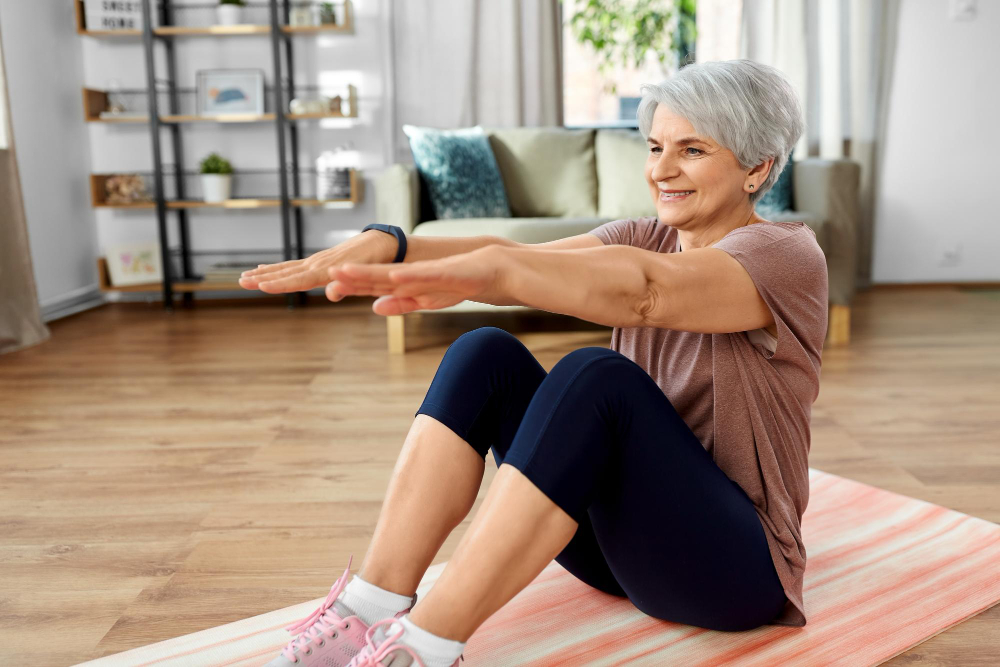
Staying active is important at any age. For women over 60, safe exercises can help maintain strength, balance, and flexibility. In this guide, you will learn about five essential physiotherapy exercises for women over 60. These routines are designed to be safe and effective. They are also easy to do at home. If you are looking for the best exercises for 60+ women, you are in the right place.
Why Exercise Matters After 60
As we age, our muscles and bones can become weaker. However, regular movement helps keep the body strong. In fact, safe workouts for seniors can reduce the risk of falls and improve mood. According to the CDC, older adults should aim for at least 150 minutes of moderate activity each week. Even small steps can make a big difference.
1. Seated Marching
How to Do It
Sit tall in a sturdy chair with your feet flat on the floor.
Hold the sides of the chair for support.
Lift your right knee as high as comfortable, then lower it.
Next, lift your left knee and lower it.
Repeat for 1–2 minutes, moving at your own pace.
Benefits
Improves hip strength and flexibility.
Boosts circulation in the legs.
Enhances balance and coordination.
Safety Tips
Start slowly and rest if you feel tired.
Keep your back straight to avoid strain.
Modifications
If you have knee pain, lift your knees only a little.
For extra support, place a cushion behind your back.
2. Wall Push-Ups
How to Do It
Stand facing a wall, about arm’s length away.
Place your hands flat on the wall at shoulder height.
Bend your elbows and lean toward the wall.
Push back to the starting position.
Repeat 10–15 times.
Benefits
Strengthens arms, chest, and shoulders.
Improves upper body stability.
Safety Tips
Keep your feet flat on the floor.
Do not lock your elbows.
Modifications
If you have wrist pain, use a towel under your palms.
Stand closer to the wall for less effort.
3. Heel-to-Toe Walk
How to Do It
Stand upright and place your right foot in front of your left, heel touching toe.
Take a step forward, placing your left heel in front of your right toe.
Continue for 10–20 steps, using a wall for support if needed.
Benefits
Improves balance and coordination.
Reduces risk of falls.
Safety Tips
Use a sturdy surface for support.
Go slowly and stop if you feel unsteady.
Modifications
If you have trouble balancing, try the exercise near a wall or countertop.
4. Seated Leg Extensions
How to Do It
Sit in a chair with your feet flat on the floor.
Slowly straighten your right leg as much as possible.
Hold for a few seconds, then lower it.
Repeat with your left leg.
Do 10–15 repetitions per leg.
Benefits
Strengthens thigh muscles.
Supports knee health.
Safety Tips
Move slowly and avoid jerking your leg.
Stop if you feel pain.
Modifications
If you have arthritis, lift your leg only as far as comfortable.
5. Gentle Neck Stretches
How to Do It
Sit or stand with your back straight.
Slowly tilt your head to the right, bringing your ear toward your shoulder.
Hold for 5 seconds, then return to center.
Repeat on the left side.
Do 3–5 times on each side.
Benefits
Relieves neck tension.
Improves flexibility.
Safety Tips
Move gently and avoid sudden motions.
Do not force your neck beyond comfort.
Modifications
If you have neck pain, make the movement smaller.
General Safety Guidelines for Exercising After 60
Always warm up before starting any routine.
Wear comfortable clothing and supportive shoes.
Stay hydrated by drinking water before and after exercise.
Listen to your body and stop if you feel pain or dizziness.
If you have health conditions, talk to your doctor or physiotherapist first.
Frequently Asked Questions
Is it safe to start exercising after 60?
Yes, it is usually safe to begin gentle exercises after 60. However, you should check with your doctor or physiotherapist before starting. They can help you choose routines that fit your needs.
How often should I exercise?
Experts suggest aiming for at least 30 minutes of activity most days. However, even short sessions can help. Listen to your body and rest when needed.
What if I have joint pain?
Choose low-impact exercises and avoid movements that cause pain. For example, seated routines or gentle stretches can be helpful. Always talk to a physiotherapist for advice.
Conclusion
Staying active is key to healthy aging. These five physiotherapy exercises for elderly women are safe, simple, and effective. However, everyone is different. Consult a physiotherapist Dr. Sanjana’s Procare Physiotherapy before starting any new exercise routine.